Abstract
Citizen science has become a key source of biodiversity data in India. For example, birdwatchers contribute data online to the e Bird database. Ecotourism provides an ideal opportunity to do this as it brings knowledgeable tourists to natural habitats with expert guidance. This article looks at how Asian Adventures, a bird watching and wildlife tour company established in 1994 with the motto ‘Tourism for Conservation – Conservation for Tourism’, incorporates citizen science into their business through offering expert bird watching tours, the Jungle Lore Birding Lodge in Pangot and the Gir Birding Lodge. In addition, tour guides collect data on birds in wetlands, school bird watching is provided with spotting scopes, guides contribute to the Delhi Bird Atlas project and the Earth Walks provide guided walks for urban locals. The company was reviewed using the Global Sustainable Tourism Council criteria, ecotourism traits from UN Tourism, tourism guidelines from the Convention on Biological Diversity and the 10 principles of citizen science. The evidence shows there are a number of tangible activities that have been put in place. However, there is little evidence of outputs. Data collection protocols, numbers of participants and independent evaluation of impact are lacking.
01Introduction: Understanding Ecotourism and Citizen Science
1.1 Ecotourism and the sustainable tourism frameworks
Ecotourism is a niche area of sustainable tourism where the quality of the natural environment is the actual product being sold. There are three different frameworks that define what ecotourism actually is.
The United Nations World Tourism Organization (UN Tourism) defines ecotourism as tourism based on nature. It involves tourists travelling to observe, appreciate and learn about nature and the traditional cultures found in natural areas. This would include an educational element and also involve conservation of the natural area [A1]. It is a form of sustainable tourism where it has taken account of the present and future economic, social and environmental impacts. It meets the needs of tourists, the tourism industry, the environment and local communities [A2].
Global Sustainable Tourism Council (GSTC) The criteria provided by the Global Sustainable Tourism Council are the most commonly used benchmark to determine if a tourism business or destination is sustainable. It includes 4 pillars (sustainable management, socio-economic impacts, cultural impacts and environmental impacts). These are a minimum standard that should be tailored to each location. There are 3 different sets of criteria for destinations, tourism businesses (hotels, tour operators – which is where Asia Adventures fits in) and meetings and events [A3].
The Convention on Biological Diversity (CBD) have set voluntary guidelines for Biodiversity and Tourism Development (2004). This applies to all forms of tourism and includes ecotourism. It aims to create a symbiotic relationship between tourism and biodiversity by involving the private sector and local communities, allocating some of the money earned through tourism into conservation efforts and increasing public education [A4]. The guidelines include monitoring, reporting and adaptive management of the impacts of tourism on biodiversity [A5]. The International Ecotourism Society (TIES) provide a concise definition stating that it is responsible travel to natural areas that conserves the environment and benefits the well-being of local people [A7].
1.2 Citizen science and its place in Indian conservation
Citizen science involves members of the public taking part in a scientific process that leads to new knowledge. The European Citizen Science Association has outlined ten principles behind good practice. These include scientific findings, benefits for both citizens and professionals, providing feedback to participants and citing them in the output. There will be biases and limits to the approach which should be understood. Data should be made public where possible. Legal and ethical considerations are also required [A8].
This can be seen through some examples from India. Scientists from ten research and conservation organizations worked together to create the State of India’s Birds 2020 report. This reported that 79% of species declined over the past five years, they analyses 867 regularly occurring species using over 10 million observations from over 15,500 birdwatchers on the e Bird India platform[C4]. The number of people taking part is increasing. In the first few weeks of the Great Backyard Bird Count 2026 in February, there were 1,092 species recorded, 64,992 checklists and 7,336 observers[C5].
Target 21 of the Kunming-Montreal Global Biodiversity Framework highlights the importance of making the best quality data accessible to decision makers and the public to help manage biodiversity, monitor progress, raise awareness and provide education. Whilst Citizen Science is not explicitly mentioned, checklist based projects support this aim [A6].
Ecotourism provides a natural fit for this data collection. People will be present in the field, guides know what species and locations there are, and lodges provide a consistent location for staff to return to throughout the seasons. This can be achieved through having protocols in place, keeping records and ensuring transparency. This is what this article will focus on.
1.3 Scope and method
Using one example of an Indian operator, Asian Adventures, as its focus, this article will explore how they offer bird watching and wildlife tours, have their own Eco-lodges and extend their offerings to urban populations via Earth Walks. This is a desk-based review using information from the organization's website, public event listings, press coverage and partner publications. The organization's web pages have been accessed in October 2026. No site visits, interviews or internal data was collected. Where claims were made by the organization and could not be independently verified they have been marked as self-reported. If there is no information available from public sources this will be indicated.
02The Role of Citizen Science in Ecotourism-Based Conservation
There are four ways Citizen Science can be used to support conservation. These can also be the four ways it can let you down.
2.1 Biodiversity awareness and education
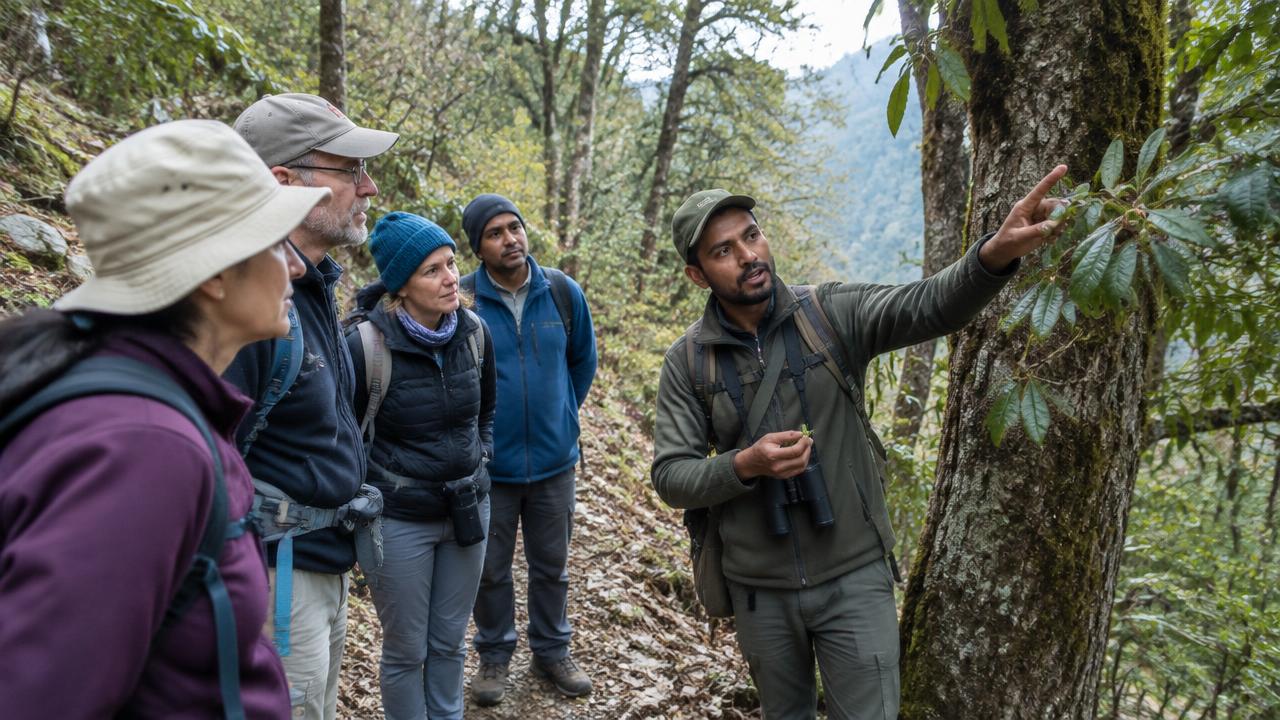
Interpretation is one of the key features ecotourism is known for [A1]. Education and raising awareness among the public are also a key part of any tourism plan [A4]. Bird watching requires more engagement and helps build knowledge of habitats, behaviour and seasonal patterns. Birds can be easily used for this purpose due to their variety, visibility and predictable activity times. They can be found across many diverse habitats including urban wetlands and forested areas of the Himalayas. The objective of Earth Walks is to convert passive nature lovers into knowledgeable people who can contribute to conversations science [B4].
2.2 Local community support
The guidelines state that tourism activities must also create economic benefits and provide employment opportunities within the local communities [A4]. Citizen science activities can benefit from employing local guides who have an expert understanding of the locations throughout different seasons and time periods. Local guides will utilize their expertise through monitoring activities. If local ecological knowledge is recorded by the operators then Target 21 ensures that traditional knowledge, innovations and practices of indigenous peoples and local communities are obtained with their free, prior and informed consent [A6]. Without this the data would be seen as exploitative and the justification for providing benefits to the community would be undermined.
2.3 Responsible wildlife interaction and data protocols
There are two protocols followed within this project. Firstly, the animal welfare protocols. These include following trails, keeping a safe distance away, keeping quiet, not provoking or feeding them, using playback sparingly and only when not close to sensitive species. We also avoid nesting areas. Asian Adventures follow a sustainability policy meaning they do not allow hunting or sport fishing. They also discourage attractions involving animals in captivity. They also ensure guides are certified and often local to the location [B2]. A partner brand who we provide logistics services to also follow ethical birding practices, encouraging others to do so too [B7]. Secondly, data protocols. Using standardized effort methods, for example minimum 15 minute watch periods, and full checklists can be uploaded to a communal platform means that data can be compared and used effectively [C5]. ECSA also follow a number of principles including data being open and those contributing acknowledged [A8].
2.4 Long-term footprint and data continuity
A one-off visit will give you a snapshot, but if you repeatedly monitor the same sites using the same methods then you can start to see trends over time. This was possible in the State of India’s Birds report because they could look at trends across over 25 years [C4]. Lodges can easily offer these repeated surveys due to having permanent staff and set walk routes. However, travelling to the site is usually the largest part of your emissions, so whilst banning plastics on-site can be a good measure, it does not mean your trip will have a low impact. An honest evaluation will help you see what you can and cannot control on-site. You can only reduce some parts of your impact by designing your itinerary to include longer stays, less transfers and local involvement.
03How Asian Adventures Contributes to Ecotourism in India
- They operate under the model ‘Tourism for Conservation – Conservation for Tourism’ where they aim to use income from Tourism to help Conservation efforts. (B1) They are the largest Birding Ground Handler in India. (B5) They are also in the first stage of a three part Third Party Sustainability Certification Programme. (B1) They have a Sustainability Policy in place around Procurement, Waste Management, Energy, Transport, Employee Training, Supplier and Activities. (B2) The subsections below show what they do in relation to Citizen Science. Summary of what they have in place and the strength of evidence is shown in Table 1 below.
3.1 Promoting bird watching and low-impact wildlife tours
The main product offer of this organization is bird watching holidays. Species-based, location specific and photographic holidays can be booked within India, such as 15 day tours of Gujarat visiting the Gir National Park and Little Rann of Kutch in November 2026 [B5]. Bird watching fits well with the ecotourism criteria of low impact as it is non-consumptive, can be taken in small groups using walking or quiet vehicles and only takes place in the early mornings and late afternoons.
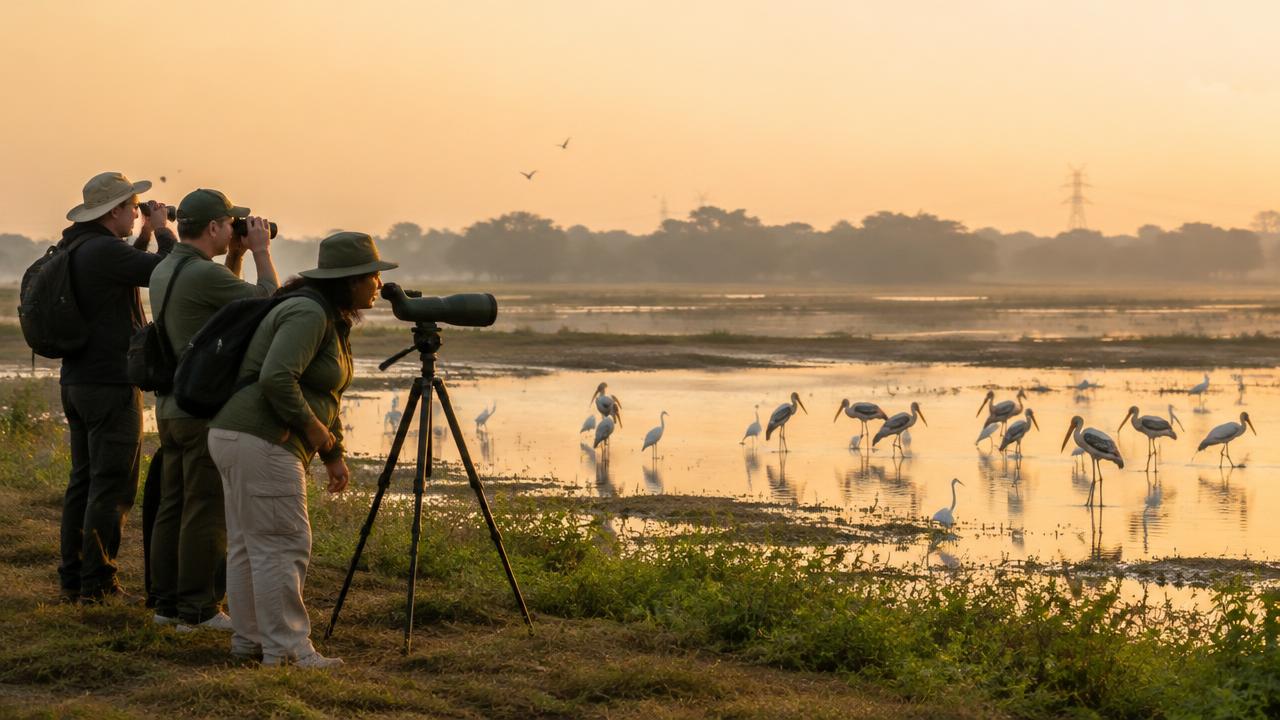
These holidays also include elements of citizen science. Firstly, their guides are involved in a wader (shorebird) monitoring scheme. During the tours they monitor the numbers of waders and the health of the wetland habitat to help with wetland conservation and advocacy [B1]. This was the most direct form of monitoring reported, however there were no results identified from this in the sources reviewed (self-report). Secondly, the tours being sold by their partner brand have e Bird checklists included in their holiday reports. An example being the November 2020 tour of Pangot, Sattal and Corbett [B8]. 1% of the cost of the tour goes into a conservation fund run by the same brand to help with local projects [B7]. Lastly, guests are asked to bring biodegradable or fabric bags with them to dispose of any waste created while out in the field. Single use plastics are prohibited in their accommodation [B1].
3.2 Eco-lodges and sustainable destination operations: Pangot and Gir
Jungle Lore Birding Lodge (Pangot Uttarakhand): Situated in a hill village approximately 15-17KM from Nainital, at around 2000mts [C6][C8], this lodge offers 5 cottages and a shared area with a library of birding books. Guides can be booked to explore the forest tracks [C6]. According to independent sources, this is the oldest and first purpose-built lodge in India for birding [B8][C8]. There are varying numbers of species within this area, ranging from 250+ to 350+ to over 580 [C6][C7][C8]. This can be taken as a rough ‘ballpark’ figure.
This birding lodge is also involved in waste and wildlife impact. As stated in a travel directory there is no recycling in Pangot. Guests are encouraged to return any plastic they brought with them and a percentage of the lodge’s profit is donated into conservation [C6]. Asian Adventures has partnered with a non-profit organization to help implement solutions to waste management issues on a small scale as part of the Zero Waste Pangot Drive. They also fund a study by a nature science non-profit to look at how waste is impacting the wildlife in Pangot. They train local youths in Pangot to be bird guides [B1]. Stays are built with no deforestation using stone and a minimal amount of timber [B1].
Gir Birding Lodge (Sasan Gir Gujarat): This lodge is situated on the edge of Gir National Park, home to the only remaining place in India for the Asiatic lion [B9]. Asian Adventures run a project called the Pangolin Project to increase awareness of the Indian pangolin within local communities. Partnering with conservation bodies and government officials to help restore habitats and reduce poaching of this species [B1]. No outcomes have been reported in the public domain.
Both of these lodges would be able to provide a consistent series of checklists due to their static location and permanent staff. However, no consistent series were found in the public domain, this being the most obvious opportunity that wasn’t taken up.
3.3 Earth Walks: engaging urban communities and everyday citizens
Earth Walks is an initiative run by Asian Adventures to increase awareness of nature in urban environments. This is done by creating ‘local guiding’ and ‘conservation communities’ with the goal of protecting habitats and species [B3]. The walks are described as being short, lasting one day, in and around local cities. By paying Rs 900 per person, a small community of guides and nature enthusiasts will be created. The guides are paid Rs 500 each walk and each participant will receive a cap and pin worth Rs 300. Children under age 12 are free to attend when accompanied by a paying adult. NGOs and corporate can also use it for raising funds [B4].
The Earth Walks have been recently advertised as being available in multiple cities. For example, the ‘Wing Beats of Najafgarh’ in Delhi (28th December 2025) was run by wildlife conservationist Pia Sethi. A walk in Chandu Budhera, Gurugram (9th August 2026) was run by Pankaj Gupta. ‘Echoes of Yamuna’ in Asita East DDA Park, Delhi (16th August 2026) was run by Dr Rajesh Kalra, and an ornithology walk in Ekana Wetland, Lucknow (20th September 2026) by Dev Vikram Upadhyay. Other walks include ‘Silent Flyers: Sarus Trails’ at Dhanauri Wetlands (31st May 2026) and ‘Flora & Fauna of Gujarat University Campus’ in Ahmedabad (21st September 2025) [B6]. These walks are 2 hours long in the morning with a specific naturalist. A discussion about the ecology of wetlands and importance of habitats will be had as well as practical tips for identification. Participants will also receive feedback and details of future walks. There is also a strict no alcohol and no substances policy [B6]. However, there is no consistency in the costs. The presentation mentions the cost of Rs 900 [B4], however the cost for the walk in Najafgarh was Rs 650. Some sources mention the walks are free to register for [B6]. Depending on the series, sponsors, or even date, the cost may vary.
Citizen Science Connection
The presentation does not explain how sightings are recorded or how data is collected from the walks. However, it does mention one of the aims of Earth Walks is to contribute to conservation science [B4]. This could be a great way to introduce many participants to citizen science however there is no public documentation of how data is made from the observations.
The most structured connection is with the Delhi Bird Atlas. This survey was run by a group of organizations including Asian Adventures as stated in a press article. The survey started at Lodhi Garden on the 27th April 2025 with almost 100 attendees. It lasted throughout May and June. The survey was split into 7 clusters and covered over 145 sub-cells. Volunteers were trained in April by mentors who were experienced birders [C1]. In the first year of the atlas 221 species had been identified with over 200 volunteers. Over 1150 checklists were added to e Bird [C2]. Contributors were rewarded with certificates of recognition at the Environment Day 2026 event [C3]. However, no specifics were given about what role Asian Adventures played.
3.4 Educational interpretation through trained naturalists
All guests are taken on tour with certified and experienced guides. All staff members including those within the office, field and lodge receive regular training which includes an evaluation of their environmental practices. [B2] The organization also provide training to young people in Pangot to become bird guides and have trained locals to become wildlife and bird watching guides using the local restaurant in a heritage village close to Jim Corbett (Chhoti Haldwani). [B1][B2] The Earth Walks are also led by specific naturalists [B6].
They also do additional educational work. They reported that they received 2 spotting scopes from a birding equipment company. The spotting scopes were given to a nature science non-profit through the Asian Adventures organization. One was given to an individual who provides astronomy and birding sessions in Uttarakhand and one was given to a school. Over 2500 students in over 70 schools have used these scopes to bird watch in the last year. The organization also have a partner education project which has involved 18 schools in 4 different districts in the Great Backyard Bird Count. [B1]
(Note: These are not specified as being in a certain time frame.)
An example of how much can be achieved in schools through independent bird counts is that around 50 students from an Eco club, guided by a nature education non-profit saw a greater scaup (a rare winter visitor to North Indian wetlands) in Haripura wetland in Uttarakhand during the 2024 Great Backyard Bird Count. [C9] (Note: This is unrelated to Asian Adventures but shows what can be achieved with this type of project.)
3.5 Sustainable tourism economics and community partnerships
Asian Adventures have identified and trained home stay providers, bird watching guides and other entrepreneurs to help promote their businesses through website and social media [B1]. They advocate using home stays and therefore maintaining green space by using existing buildings [B1]. Their sustainability strategy includes adding extra elements into their itineraries to support local communities, for example a visit to a women’s handicraft co-operative while visiting Ranthambhore. They also try to book accommodation that is certified or working towards certification by GSTC or similar bodies [B2]. They also support conservation by helping install electric fencing in Kaziranga, funding a bird conservation club, training staff in Nandaur Tiger Reserve and beginning wildlife protection in Corbett [B1]. They also offer a 30 day ‘Micro-Volunteering Himalayan Conservation Tour’, costing US$2450 [B10].
As the data gathering is part of an activity that guests will be paying for anyway, there are low costs involved. However, there is no information available in the public sources about how much money is generated locally, how much is spent locally, how much the guides are paid (aside from the Rs 500 they receive for each Earth Walk) or how much goes into conservation projects.
Table 1. Citizen-science-relevant activities of Asian Adventures and the strength of public evidence
- Activity — What is publicly documented — Link to citizen science — Evidence status
- Birding tours and wader monitoring — Guides monitor wader numbers and wetland habitat health during tours [B1] — Direct (monitoring) — Self-reported; no outputs found
- Partner-branded birding tours — Trip report links an e Bird checklist (Nov 2020); 1% of tour cost to a conservation fund [B7][B8] — Direct (checklists) — Partner publication
- Jungle Lore Birding Lodge, Pangot — Five cottages; Zero Waste Pangot Drive; garbage–wildlife study funded; youth guide training [B1][C6] — Indirect (base, research support) — Self-reported plus independent lodge descriptions
- Gir Birding Lodge — Pangolin Project awareness and outreach [B1] — Indirect (awareness) — Self-reported; no results
- Earth Walks — Two-hour guided urban walks in several cities with named naturalists and feedback sessions [B3][B6] — Entry stage (education, community) — Independent event listings; no data protocol described
- Delhi Bird Atlas — Named among the consortium of organizers [C1] — Direct (structured eBird survey) — Independent press; own role not specified
- School bird watching with scopes — Over 2,500 students, 70+ schools; 18 schools in Great Backyard Bird Count [B1] — Direct (school counts) — Self-reported; period unspecified
04Opportunities
- The following gaps are also opportunities, most can be addressed at little cost:
- Data collection – Develop a data collection system. Use a quick data collection protocol (e.g. 15 min checklist per stop) and upload this to e Bird. Give participants a summary of their results. This follows the ECSA principle of feedback [A8].
- Data transparency – Allow greater transparency by publishing a series of standardized checklists collected by Jungle Lore and Gir Birding Lodge. Publish the Pangot rubbish survey and wader monitoring project.
- Annual reporting – A brief open source report on the number of people involved, checklists submitted, guides trained and money earned locally.
- Wildlife health observations – Include wildlife health observations by experts. Use citizen science to provide additional data on sick, injured or dead wildlife. This can be done by having a clear set of safety guidelines in place and routing reports through veterinary and forestry authorities. Monitoring scavengers is an important task considering the dramatic decline in vultures shown in the State of India’s Birds 2020 [C4].
05Conclusion
Asian Adventures provide a logical framework to combine ecotourism with citizen science using birding expert tours, static accommodation, well trained local guides, provision of equipment for schools, an urban initiative (Earth Walks) and contributions to the Delhi Bird Atlas. This project meets the aims of UN Tourism and GSTC by promoting education, community benefits and management. It also meets objectives set by the CBD to increase awareness and monitoring [A1][A3][A4]. However, it does not fully meet the principles of ECSA. While they record how they get participants interacting with nature, they do not show how they get people to contribute data to the project, aside from the Delhi Bird Atlas. There are some mentions of wader monitoring and e Bird data collection by partner tours but this is not public.
To improve this, the organization should make their protocols and annual stats public. Each Earth Walk should be considered a survey by the designers. Conservation bodies and tourism boards should reward operators that contribute to public data sets. A visitor will only be an asset if they contribute their data. Ecotourism gets its name because it contributes to increasing knowledge about the area and helps protect it.
06References
(A) Global policy and standards frameworks
[A1] UN Tourism. Ecotourism and Protected Areas. Accessed October 2026. https://www.untourism.int/ar/node/85
[A2] UNEP and World Tourism Organization (2005). Making Tourism More Sustainable: A Guide for Policy Makers. Definition as quoted in the UNESCO World Heritage Centre glossary, “Sustainable Tourism.” https://whc.unesco.org/fr/glossaire/376/
[A3] Global Sustainable Tourism Council. GSTC Destination Criteria (v2.0, 2019) and overview of GSTC Criteria sets. Accessed October 2026. https://gstcouncil.org/gstc-criteria/gstc-destination-criteria
[A4] Secretariat of the Convention on Biological Diversity (2004). Guidelines on Biodiversity and Tourism Development. Montreal. https://www.cbd.int/tourism/guidelines.shtml
[A5] Convention on Biological Diversity. Tourism Supporting Biodiversity: A Manual on Applying the CBD Guidelines on Biodiversity and Tourism Development. https://cepf.net/resources/documents/tourism-manual
[A6] Convention on Biological Diversity. Kunming-Montreal Global Biodiversity Framework, Target 21: Ensure that Knowledge is Available and Accessible to Guide Biodiversity Action. https://www.cbd.int/gbf/targets/21
[A7] The International Ecotourism Society (TIES). TIES Overview: What Is Ecotourism? (definition, 1990). https://ecotourism.org/ties-overview
[A8] European Citizen Science Association (2015). Ten Principles of Citizen Science. https://www.ecsa.ngo/10-principles/
(B) Organizational sources: Asian Adventures and Earth Walks
[B1] Asian Adventures. Tourism for Conservation – Conservation for Tourism (Conservation page). Accessed October 2026. https://www.asianadventures.net/conservation
[B2] Asian Adventures. Sustainability Policy. Accessed October 2026. https://www.asianadventures.net/sustainability-policy
[B3] Asian Adventures. About Earth Walks. Accessed October 2026. https://www.asianadventures.net/about-earth-walks
[B4] Asian Adventures. Earth Walks (programme presentation, PDF). https://asianadventures.net/sites/default/files/Earth-Walks.pdf
[B5] Asian Adventures. Home page, including office address, tours and eco-tourism statements. Accessed October 2026. https://www.asianadventures.net
[B6] Earth Walk event listings published under Asian Adventures as host: “Wing Beats of Najafgarh” (28 Dec 2025); “Birds, Wetlands and Beyond” (Chandu Budhera, 9 Aug 2026); “Echoes of Yamuna” (Asita East, 16 Aug 2026); “Wings & Wilderness” (Ekana Wetland, 20 Sep 2026); “Silent Flyers: Sarus Trails” (Dhanauri, 31 May 2026); “Flora & Fauna of Gujarat University Campus” (21 Sep 2025). https://happeningnext.com/event/wing-beats-of-najafgarh-eid1ar6igwshj
https://happeningnext.com/event/birds-wetlands-and-beyond-eid1ar58672sj https://happeningnext.com/event/echoes-of-yamuna-eid1ar7nj8l4p
https://happeningnext.com/event/wings-andamp-wilderness-eid1ar5t5gqht
https://allevents.in/sirsa/silent-flyers-sarus-trails-earth-walks-at-dhanauri-tickets/80002975214891
https://allevents.in/ahmedabad/flora-and-fauna-of-gujarat-university-campus/80002825829206
[B7] Partner brand for which Asian Adventures provides logistics. About page (1% conservation contribution; ethical birding). https://bubobirding.com/about
[B8] Partner brand trip report. Himalayan Birding Tour: Pangot, Sattal, Corbett, November 2020. https://bubobirding.com/himalayan-birding-tour-pangot-sattal-corbett-trip-report-november-2020/
[B9] Partner brand tour page. Gir National Park, Gujarat (booking handled by Asian Adventures). https://bubobirding.com/tour/gir-national-park-gujarat/
[B10] Asian Adventures. Conservation Travel (Micro-Volunteering Himalayan Conservation Tour). Accessed October 2026. https://www.asianadventures.net/conservation-travel
(C) Supporting independent sources
[C1] News agency report (28 April 2025). Delhi Bird Atlas summer survey launched at Lodhi Garden. https://www.theweek.in/wire-updates/national/2025/04/28/des72-dl-bird-atlas-survey.html
[C2] News agency report (20 July 2025). 221 bird species mapped in Delhi in year-long citizen science effort. https://www.deccanherald.com/india/delhi/221-bird-species-mapped-in-delhi-in-year-long-citizen-science-effort-3638712
[C3] Civil society efforts toward Delhi Bird Atlas recognized (8 June 2026). https://delhigreens.com/2026/06/08/civil-society-efforts-toward-delhi-bird-atlas-recognized/
[C4] Most Indian birds declining, finds new report using citizen science data (State of India’s Birds 2020). News report, February 2020. http://india.mongabay.com/2020/02/most-indian-birds-declining-finds-new-report-using-citizen-science-data/
[C5] Great Backyard Bird Count, India. Preliminary 2026 results and protocol. https://birdcount.in/event/gbbc/
[C6] Jungle Lore Birding Lodge. Responsible-travel directory listing. https://www.responsibletourismindia.com/stay/jungle-lore-birding-lodge/474
[C7] Jungle Lore Birding Lodge, Pangot. Travel-company listing. https://www.experiencetravelgroup.com/india/hotel/jungle-lore-birding-lodge
[C8] Pangot, Uttarakhand, India. Birding-sites guide. https://www.birdingplaces.eu/pl/birdingplaces/india/pangot
[C9] Yay! We spotted the rare greater scaup duck. Local news report (26 March 2024). https://villagesquare.in/uttarakhand-school-students-spot-rare-greater-scaup-duck/