Abstract
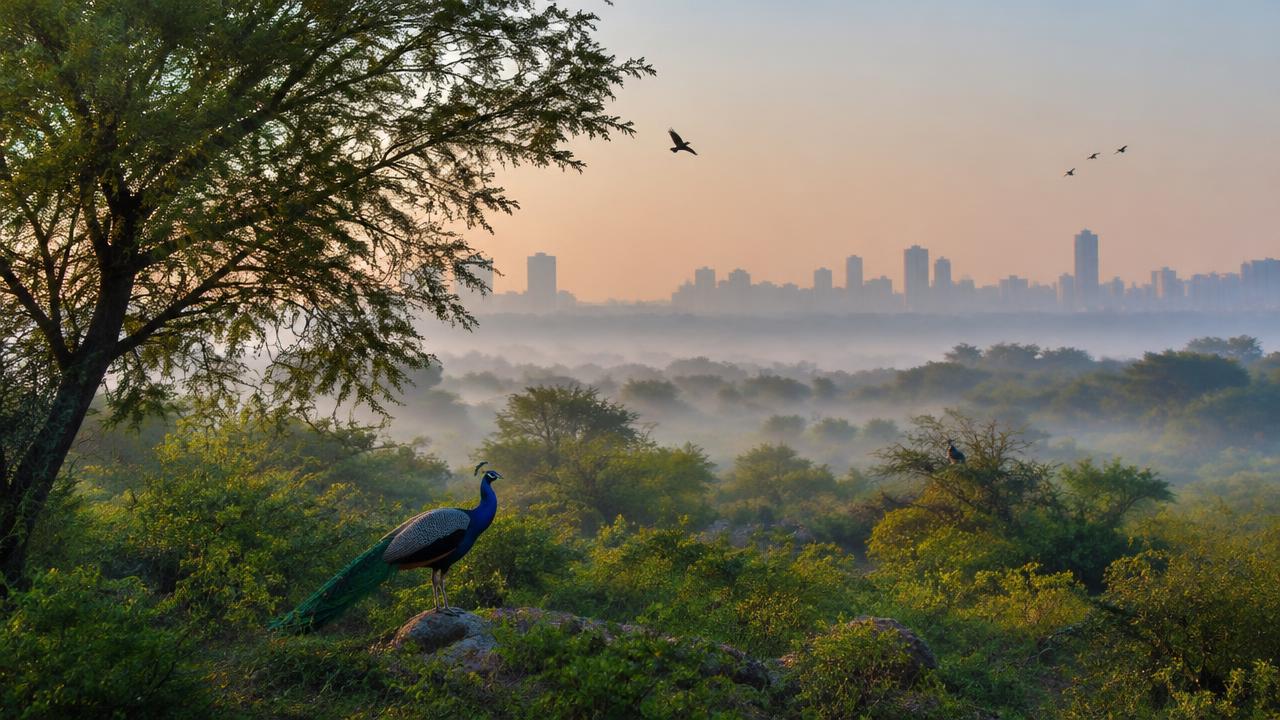
Urban biodiversity refers to the variety of plants, animals, fungi and habitats that exist within and around cities. In India, where rapid urbanization has led to the expansion of urban areas into what were once rural regions, these areas are under threat from urban development but are also the primary locations where most Indians encounter wild nature. This article explores how the company Asian Adventures, which was established in 1994, supports conservation efforts through its various tourism programs. The company's philosophy is "Tourism for Conservation - Conservation for Tourism." The article examines the company's various tourism programs, including its birding tours, its nature lodges located at Pangot (Uttarakhand) and Sasan Gir (Gujarat) and its Earth Walks program, which allows tourists to explore the green spaces of urban areas. Each of these programs is examined in relation to the principles of the Convention on Biological Diversity (CBD), the Global Sustainable Tourism Council (GSTC) and the United Nations Tourism principles. Also, the article discusses various topics related to the sustainability of tourism programs, such as carrying ability, habitat disturbance, resource management and the measurement of conservation outcomes.
01Introduction: Understanding Urban Biodiversity and Responsible Nature Engagement
The CBD defines biodiversity as the variability among living organisms from all sources, including terrestrial, marine and other aquatic ecosystems and the ecological complexes of which they are part. The concept of urban biodiversity applies this definition to the city. Urban biodiversity refers to the diversity of species that live within a city and its green and blue spaces. These green and blue spaces support birds, butterflies, spiders, small mammals and, in some Indian cities, even large carnivores. Also, these green and blue spaces provide services to the city, such as cooling the environment, storing carbon and providing recreational areas for the city's inhabitants. Both the CBD's Cities and Biodiversity Outlook and the Kunming-Montreal Global Biodiversity Structure (Target 12) highlight the need for biodiversity conservation efforts within urban environments.
A less visible problem is the loss of public contact with nature.Soga and Gaston (2016) describe this phenomenon as the extinction of experience. As people lose their experience with wildlife, they become less aware of its existence and are less likely to support conservation efforts for those species. So, conservation efforts must be established in areas where people live in order to maintain the experience of encountering wildlife.
Two tourism frameworks give this a practical structure:
- The United Nations Tourism (formerly UNWTO) defines sustainable tourism as tourism that considers all of its impacts on the economy, society and the environment of the destination it visits, while also considering the needs of its visitors, the tourism industry, the environment and the local communities in which it takes place.
- The Global Sustainable Tourism Council (GSTC) has established criteria for sustainable tourism that are divided into four main categories: sustainable management, socio-economic impacts, cultural impacts and environmental impacts. These categories include biodiversity conservation, resource efficiency and waste reduction.
The International Ecotourism Society (TIES) defines ecotourism as responsible travel to natural areas that aims to conserve the environment, sustain the well-being of the local population and provide for the interpretation and education of tourists regarding the area's natural features and the impact of tourism on those natural features. This article uses that definition as the standard for judging whether an organization's activities, including its urban programmed, deliver conservation value.
02The Role of Urban Biodiversity Engagement in Conservation
2.1 Biodiversity Awareness and Education
Asian Adventures was founded by Mohit Aggarwal in 1994. The company's philosophy is "Tourism for Conservation - Conservation for Tourism." Asian Adventures operates several nature lodges across India and also has an initiative called Earth Walks that applies this philosophy to urban environments
2.2 Local Community Support
Urban conservation efforts are dependent upon residents of those cities who value and protect their local green spaces. Walking through these areas helps to create a constituency for conservation efforts, such as supporting the local forest department or opposing land conversion efforts. Also, these walks help to create skilled workers in the area, such as field naturalists and educators.
2.3 Responsible Wildlife Interaction Protocols
Urban habitats are small and often under pressure, so disturbance matters. Accepted protocols include:
- small group sizes;
- keeping to established trails;
- maintaining distance from nests, dens and roosts;
- no feeding, baiting or collecting;
- restraint in the use of recorded calls.
Walking and observation-based activities are inherently low-impact when these rules are followed consistently.
2.4 Long-Term Environmental Footprint
The programs held in the city avoid requiring participants to travel long distances and do not require any infrastructure to be constructed within the city. The footprint of these programs is dependent upon the behavior of the participants with respect to waste, the size of the group and the care that is taken at the site of the program. Monitoring and adaptive management of the programs, as advised by the CBD tourism guidelines, is required to ensure that the impact of these programs is kept to a minimum.
03How Asian Adventures Contributes to Urban Biodiversity and Everyday Conservation
Asian Adventures, founded by Mohit Aggarwal in 1994, is a company that focuses on wildlife and responsible travel. The company's philosophy is stated as "Tourism for Conservation - Conservation for Tourism." The company owns several nature lodges throughout the country and has initiated an Earth Walks program in urban areas.
3.1 Promoting Bird watching and Low-Impact Wildlife Tours
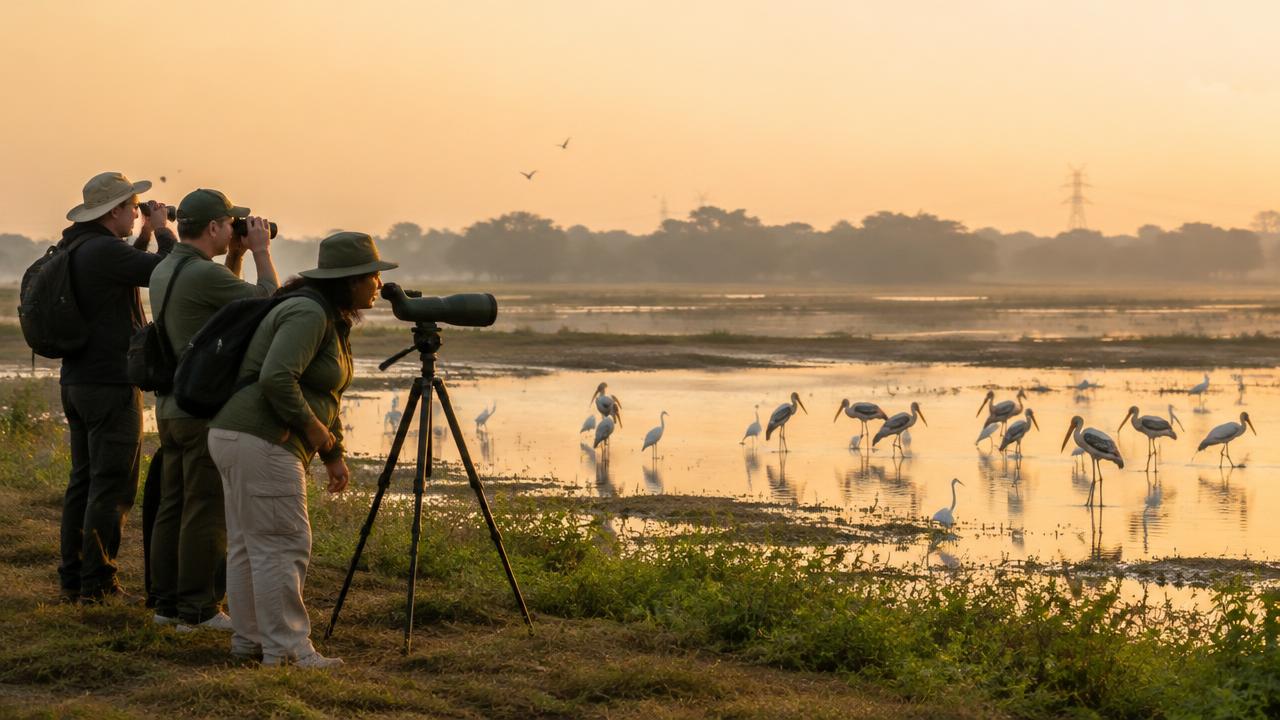
Bird watching is a quiet activity that requires no infrastructure other than trails. Asian Adventures offers specialist birding itineraries, including through its partnership with Bubo Birding. One of their itineraries takes you to Gir National Park in India, where you can see species like the Indian Peafowl, Jungle Nightjar, Painted Sandgrouse, Yellow-footed Green Pigeon and the Asiatic lion. This species-level, observation-based approach is the same one that Earth Walks applies in the city.
3.2 Nature Lodges and Sustainable Destination Operations
Jungle Lore Birding Lodge, Pangot (Uttarakhand). The lodge is situated on a hill slope among oak trees, 17 km from Nainital. The lodge has five cottages. Established in 1997, the lodge employs local people as naturalists to provide an opportunity for them to earn a living through ecotourism. The lodge practices environmental conservation by donating a portion of its profits to conservation efforts and the Zero Waste Pangot initiative, which aims to reduce waste in Pangot by encouraging hotels to use reusable bottles and containers. Because Pangot has no recycling facilities, guests are asked to take their plastic back with them.
Gir Birding Lodge, Sasan Gir (Gujarat). The lodge occupies 22 acres, with cottages set in a mango orchard that supports a variety of western Indian birds. It has an in-house naturalist who leads bird watching and photography excursions, and offers winter-evening performances by the local Siddi community. Gir is the only remaining site in India for the Asiatic lion.
The lodges matter to an article on urban biodiversity for a specific reason. They show the operator's ability to fund and sustain trained naturalists, waste-reduction practice and local employment in the field, which is the capacity that Earth Walks draws on in the city.
3.3 Earth Walks: Engaging Urban Citizens in Local Biodiversity
Earth Walks is the clearest example of everyday conservation in Asian Adventures' work. It runs naturalist-led walks in Delhi's green spaces, and walks have also been listed in other cities. Documented venues include:
- Sanjay Van and the Asola-Bhatti Wildlife Sanctuary;
- Aravalli Biodiversity Park, Sunder Nursery and Mangar in the Aravalli range;
- Asita East on the Yamuna floodplain;
- Ekana Wetland in Lucknow.
Themed walks have included butterflies in the Asola-Bhatti sanctuary, seasonal butterflies at Aravali Biodiversity Park, birdwatching at Sanjay Van, and a Sunder Nursery walk pairing mandala art with bird watching. The Yamuna floodplain walk at Asita East is free to attend, covers wetland and floodplain ecology within an urban setting, and operates under a no-alcohol, no-substances policy. Other walks have charged a modest fee, such as INR 250 per person for a Sanjay Van walk. The programme also publishes trip reports, which provide a public record of what was seen and discussed.
Three features are relevant to the CBD and GSTC criteria:
- Small groups. A documented Sanjay Van walk had 18 participants, and a spider and macro-photography walk at Asola-Bhatti had 5. Group sizes of this order limit trail disturbance.
- Interpretation of local ecology. The Sanjay Van walk covered the forest's history, its place as an extension of the southern Aravalli ridge, and the ecological role of the invasive Prosopis juliflora (vilayati kikar). The Asola-Bhatti spider walk explained the sanctuary's role as a carbon sink for Delhi NCR and the leopard's role as an umbrella species. These are conservation-literacy topics rather than purely recreational ones.
- Participant conduct. Walk notices advise a reusable water bottle and comfortable shoes, which reinforces low-waste behaviour from the start.
Together, these features address the "extinction of experience" problem directly. Residents meet leopards' habitat, spiders, butterflies and floodplain birds within their own city, guided by people who can explain what they are seeing.
3.4 Educational Interpretation Through Trained Naturalists
Earth Walks draws its leaders from field-based backgrounds. One walk leader is a researcher-naturalist at Asian Adventures whose work includes research on the Indian Leopard in Asola-Bhatti that confirmed the species' presence and underpinned a report published by the Delhi Forest Department and BNHS. Some of the other participants in the workshop included a naturalist from Bharatpur who has extensive knowledge of the birds that inhabit the region, as well as an educator with over 13 years of experience and over 5,000 educational sessions on topics like wildlife, biodiversity and afforestation. By including people with such specialized knowledge, the accuracy and conservation value of the workshop's interpretation can be increased.
3.5 Sustainable Tourism Economics and Community Partnerships
The economic model operates at several levels:
- Local employment and skills. Naturalist training at Pangot converts local knowledge of birds into skilled work.
- Direct conservation funding. A share of lodge profit is directed to conservation.
- Cultural economy. Performances by the Siddi community at Gir create paid cultural exchange alongside wildlife tourism.
- Public benefit. The free and low-cost nature of Earth Walks allows for a wide range of citizens to gain an understanding of and appreciation for the importance of these urban green spaces, even if those people do not contribute to the ticket sales of these walks.
4. Practical Challenges and Opportunities
Carrying ability. The green spaces in cities are small and can only tolerate a few visits from any group of people. To minimize impact on the environment, group sizes and the frequency of walks should be established according to the ecological limits of those areas. The small group sizes of the Earth Walks participants show a willingness to limit the impact of their activities on the environment; however, establishing a published limit on group size and scheduling walks within specific time frames would help to ensure that those limits are adhered to.
Habitat disturbance. To minimize the disturbance of bird habitats during the walks, several key measures should be implemented. For example, people should be required to stay on designated trails, avoid playing calls to birds, maintain a specified distance from nesting sites and avoid sensitive habitats altogether during the breeding seasons of those birds. These need to be written into leader protocols and reviewed, not left to individual judgment. Walks in sanctuaries such as Asola-Bhatti also operate within forest department rules.
Resource management. Urban walks require little infrastructure to support the activity of walking but there is a risk of waste and litter accumulating at popular urban walk locations. To minimize the risk of waste and litter, it would be good to implement the same policies for urban walks as have been implemented for Pangot. At the lodges, water, energy and wastewater need continuous monitoring against GSTC environmental criteria.
Measuring conservation impact. This is the principal gap. The publicly available material regarding Asian Adventures and Earth Walks provides information about the various activities that are conducted by these organizations, their practices and their intentions. However, no quantitative information is provided regarding the outcomes of these organizations' activities, such as the number of participants, the number of people who return to these tours, the percentage of revenue from these tours that is contributed to conservation efforts, the number of jobs created for local residents or any changes in the species records within these protected areas. Credible assessment requires:
- annual published figures on participation, conservation contributions and local employment;
- standardized species lists from walks submitted to open databases such as e Bird and iNaturalist, creating a long-term monitoring record for each site;
- pre- and post-walk surveys measuring changes in participants' knowledge and behaviour;
- third-party certification against GSTC-recognised standards.
Opportunities. Walk participants are a ready pool of citizen-science observers. Linking walks to habitat stewardship, such as litter clean-ups or native planting, would convert awareness into measurable action. The trained-naturalist model used at Pangot could be extended to new urban sites and partner institutions.
04Conclusion
Asian Adventures shows how an established wildlife operator can extend conservation practice from remote reserves to the city. Its specialist birding, community-linked lodges and trained naturalists provide the expertise, and Earth Walks delivers it to everyday citizens in the habitats closest to them. This is consistent with the CBD's call for urban biodiversity action and with the GSTC and UN Tourism emphasis on education, local benefit and low environmental impact.
The remaining task is evidence. To establish Earth Walks as a replicable model of everyday conservation, the following actions are recommended:
- Publish impact data. Report participation, conservation contributions and local employment annually.
- Monitor biodiversity. Submit standardized species records from every walk to open databases.
- Measure learning and behaviour. Use short surveys to test whether walks change knowledge and conduct.
- Formalist protocols. Publish group-size limits, seasonal restrictions and conduct rules for every site.
- Link awareness to action. Pair walks with stewardship activities at the sites visited.
Urban conservation succeeds when ordinary residents learn to see, name and defend the wildlife around them. Programmed that make this experience routine, and can show its results, will do the most to protect urban biodiversity in India.
05References
A. Global Policy and Standard Frameworks
- Secretariat of the Convention on Biological Diversity (CBD). Convention on Biological Diversity, Article 2 (Use of Terms). 1992. https://www.cbd.int/convention/articles/?a=cbd-02
- CBD. Kunming-Montreal Global Biodiversity Framework (Decision 15/4, 2022), Target 12. https://www.cbd.int/gbf
- CBD. Guidelines on Biodiversity and Tourism Development (2004; Decision VII/14). https://www.cbd.int/tourism/guidelines.shtml
- Secretariat of the CBD (2012). Cities and Biodiversity Outlook. https://www.cbd.int/en/subnational/partners-and-initiatives/cbo-action-and-policy
- UN Tourism (formerly UNWTO). Sustainable Development of Tourism: Definition and Programme. https://www.unwto.org/sustainable-development
- Global Sustainable Tourism Council (GSTC). GSTC Criteria for Destinations and for Industry (Hotels and Tour Operators). https://www.gstcouncil.org/gstc-criteria/
- The International Ecotourism Society (TIES). Definition of Ecotourism (2015). https://ecotourism.org
- Supporting literature: Soga, M. and Gaston, K.J. (2016). Extinction of experience: the loss of human–nature interactions. Frontiers in Ecology and the Environment, 14(2), 94–101.
B. Organizational Sources
- Asian Adventures. About Asian Adventures (hosted on Bubo Birding). https://bubobirding.com/about-asian-adventures/
- Bubo Birding / Asian Adventures. Gir National Park, Gujarat (tour itinerary). https://bubobirding.com/tour/gir-national-park-gujarat/
- Jungle Lore Birding Lodge. Birding Lodges of the World: Jungle Lore Birding Lodge, India (operator interview). 10,000 Birds. https://www.10000birds.com/birding-lodges-of-the-world-jungle-lore-birding-lodge-india.htm
- Responsible Tourism India. Jungle Lore Birding Lodge. https://www.responsibletourismindia.com/stay/jungle-lore-birding-lodge/474
- Gir Birding Lodge. Property description. https://www.naturesafariindia.com/gir-birding-lodge/
- Earth Walks (Asian Adventures). Delhi Earth Walks: events, trip reports and walk leaders. https://www.earthwalks.asianecotours.com/
Editorial note: the 1994 founding date comes from the commissioning brief and should be confirmed with Asian Adventures. Section 4 states that quantitative impact data is not publicly available; if the organization can supply figures, they would strengthen Sections 3.5 and 4. Please verify the Part A URLs before publication.